FAST FORWARD

“One is the loneliest number that you will ever do.” John Farnham

Several years ago I wrote a piece on “one is the loneliest number,” adding various reasons why that didn’t necessarily have to be true:

So many songs including the one with the famous line in the above title ‘one’ means heart ache, single, lonely, by myself and all of the other negative images they want us to conjure up about poor little ‘one’.

Isn’t ‘one’ the primary, the very first number in our numeric system? Without ‘one’ there would be no starting and with all of the other infinite numbers trailing behind it certainly is not lonely.

For me being by myself gives me the opportunity to do as I please. So when you are alone and feeling sorry for yourself embrace your ‘oneness’.

Always remember tomorrow is another day and a chance to be number ‘one’ again, head of the pack and at the top of the heap. If you learn to love yourself, you will be your own best company.”*

Fast forward to the present. Right now, I am waiting in the orthopedics office, alone, filled with a room full of injured people to varying degrees of injury and loneliness. Old, young, broken arms and legs, wheelchairs. Surveying the large waiting room, I am feeling quite vulnerable, witnessing how a trip, slip or other catastrophe can change one’s life. The human body is an amazing machine. But a human machine that is quite fragile and vulnerable to all sorts of damage.

My husband is in the city, my children are spread throughout the south and Midwest and here I am, ‘one’ and not so cocky about my ‘oneness.’

Right now, I am realizing that all of the prior feelings I had about the number 1, changes as I get older and more aware of how important 2 or more can be.

On my way home today, a quick stop at Dunkin’ Donuts for número uno, and then calls to my husband and children to tell them that they are ‘one’ in my life, head of the pack and top of the heap!

* Excerpts from Read Between My Lines: What Was I Thinking. Sandra Hart Copyright.

Copyright 2014 Sandra Hart

20140709-133822-49102154.jpg

GONE FISHIN’ – DO NOT DISTURB

I think my ‘smarts’ flew out the window sometime after I was 50. I keep doing stupid stunts that I used to do without a problem. Like climbing a grassy knoll in the pouring down rain to retrieve my blind dog, then missing the cement tire stop in the parking lot. I flew about 15 feet in the air slid on the asphalt and tore my rotator cuff. Luckily my sweet little dog was fine. Being blind probably saved her life. She couldn’t see what was coming and didn’t stiffen her joints.

Then a few years later, idiot that I appear to have become, I was trying to reach something in the kitchen from the top shelf close to the ceiling. Instead of being a normal person and getting the stepladder, I used a plastic chair that I was planning on taking outside to put on the deck. Well, the chair leg collapsed into a heat grate pinning my leg as it slipped down through the arm bracing it so that I couldn’t bend my leg and I wound up fracturing my tibia.

Amazing that for 50+ years I’ve been going along in my life, not realizing I was kind of stupid, never even much experienced anything more than bouts of poison ivy rash or bee stings.

But, this time, I really think I am done. No more stupid. I may be getting smart too late, but I am going to try. No lifting, moving pots and furniture like a 20 year old. I am going to try to act my age from now on. I say this, I write this, wearing a back brace with two severe lumbar compressions from being ‘stupid is, stupid does’.

I have great bones, younger that I am, I have been told, but maybe my brain hasn’t gotten the message that young bones don’t make you smart or young again.

So this Fourth of July, I will not be the hostess with the ‘mostess’ and everyone will be on their own. Don’t even ask me to move a chair for you!
I have retired from being younger than I am!

20140703-090514-32714574.jpg

CRATE PAPER HEAVEN

It's prom time again and oh how times have changed! Between the prom gowns and the events, today's proms are a world away from those in the late 1950s.

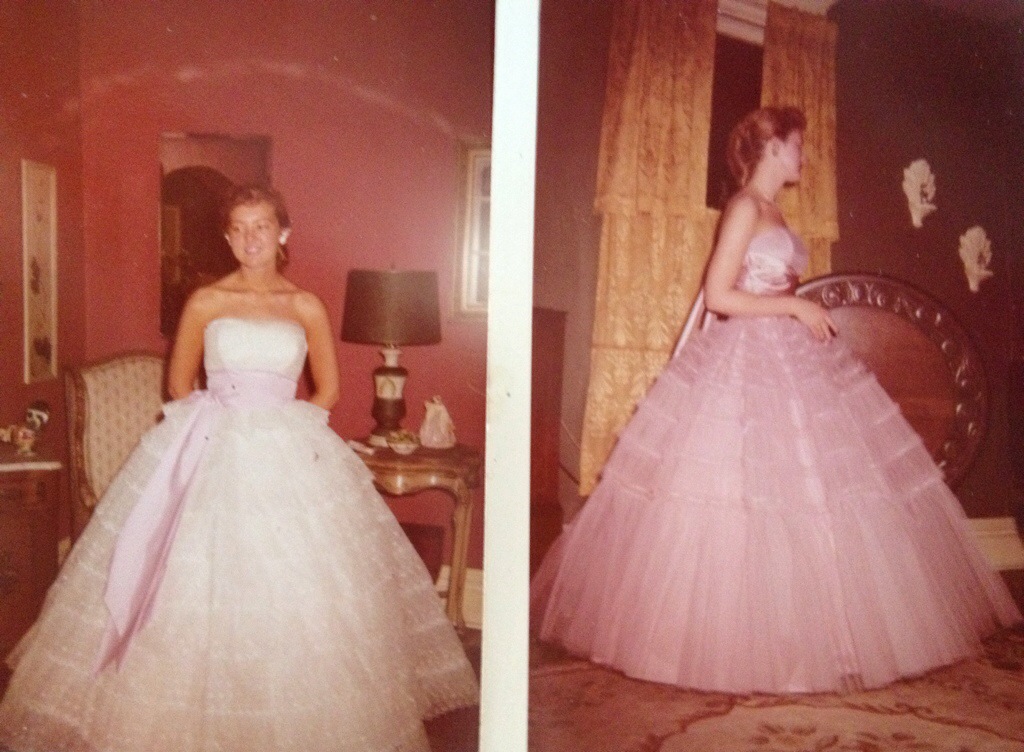
Our gowns were something out of Gone With The Wind, with crinolines and tight waists. The fuller the skirt, the prettier we felt.

.

20140702-113619-41779803.jpg

Most of us were able to find a beautiful gown and crinolines that the local merchants had stocked especially for our proms, or sometimes, if we really got lucky, we could talk our parents into driving to Pittsburgh to go shopping at Kaufman's or Horne's Department Stores.

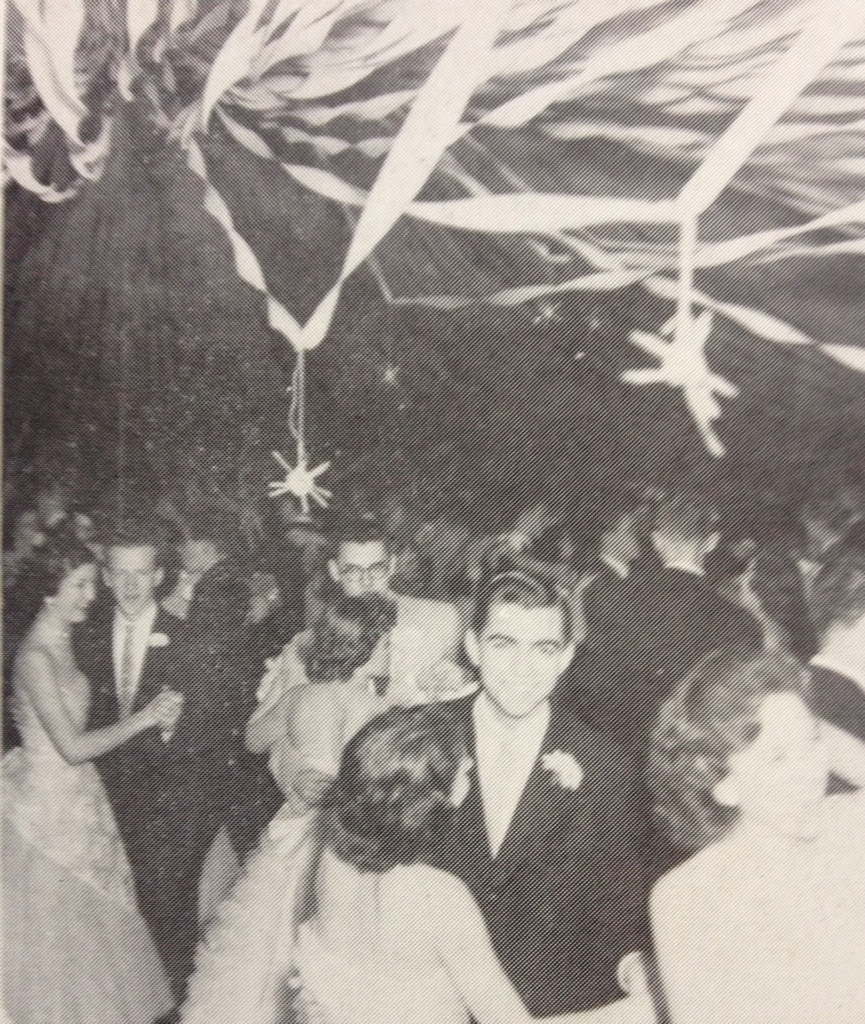
Our proms were held – OMG – in our gymnasium. No big bucks to rent a fancy catering hall-we did it ourselves. Themes like Krystal Kingdom and Isle of Dreams and we would jitterbug and romantically slow dance to local bands like Bobby Vinton.

My junior prom had a Paradise Island theme, a crate paper dream with palm trees and all of the things that a teenager would think of finding on a tropical Island minus Sandra Dee, Annette and Frankie.

The probability that most of us in the late 1950s living in a small blue collar steel town had never really been to a tropical island, except perhaps in the movies or our dreams, was almost certain. And that the local merchants would be solicited each year to let us borrow their window dressings was also almost certain. Without support of our business community our high school paradise could never have happened. Basically, our whole town was involved in our big night.

Our dates didn't rent chauffeured limos, but borrowed the family car and gave it a lot of teenage testosterone elbow grease to be sure that it was polished to a high shine.

And fathers gave strict warnings when handing over the car keys to their sons, and daughter's fathers gave strict warnings to be sure that his prize was brought home safely and at a decent hour unless they were allowed to go to the "After Glow", a place where we could go after the prom where our parents felt we would be safe.

We didn't stress about renting fancy limousines, asking our parents to come up with hundreds of dollars so that our prom venue would outdo all others and so that we could have the best designer short sexy dress. We were so happy to have what we had.

All we dreamed about was a date for the prom, a beautiful dress and a gym decked out to the max by our classmates. We were not a materialistic generation. We had aspirations, but knew we had to earn our future. That was the 50's generation, my time, and in my opinion, looking back, and although we probably didn't think twice about it then, those really were the best of times.

20140702-114058-42058615.jpg

Sandra Hart Copyright 2014. All rights reserved.

STEEL TOWN ON BROADWAY

( In the process of trying to downsize, it seems as though I am reliving my past all over again. Moments in time, events that I had honestly forgotten about. Will this mean anything to anyone but me?)

20140618-171329-62009015.jpg

November 17,1994

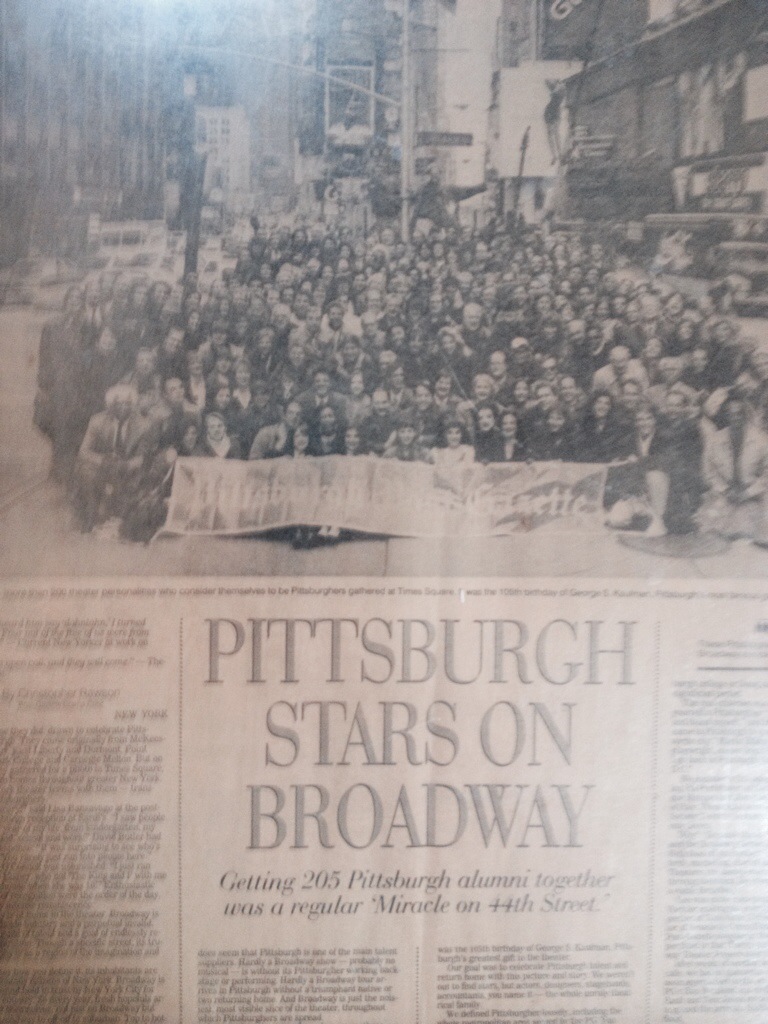
It was a chilly day. The fall wind was whipping down the famous street as we all gathered in the square of Times Square, in the center on Broadway in New York City. We were all ages, all had our stories to tell, but all 206 of us had something in common. We were actors. We appeared on Broadway. We were from Pittsburgh, Pennsylvania, all of us.

Christopher Rawson the drama critic at the Pittsburgh Post Gazette at the time, either hatched this brainchild on his own, or was given the assignment by the editor of the Gazette. In any event it was quite a task getting all 206 of us actors at the same place at the same time. And for each of us, it would be a once in a lifetime event. I even wore a red beret trying to stand out in a crowd of 206 actors. That was a laugh because the paper printed it in black and white.

I was 107 in the photo standing next to Lynda Jamison, who started her cabaret career in her forties with the encouragement from the likes of Margaret Whiting and Julie Wilson.

I left the Pittsburgh area in 1972, so it was a long time since I had gone through the tunnel and into the City of Three Rivers and the Golden Triangle. Most of my fellow actors that day had rooted in Manhattan where they could ply their craft but their hearts were still back in their hometown-Pittsburgh Pennsylvania.

So a smidgen of The Steel City was standing for a still shot in the heart of Broadway, far away from where they began their journey in a business that is always not so kind to transplants with a dream. Our Pittsburgh town made it happen

(The Pittsburgh Post Gazette reran this story in 2004 )

Copyright 2014 Sandra Hart. All rights reserved.

20140618-173315-63195182.jpg

LAST DAY OF SUMMER

(In the last few days during a late spring cleaning and efforts to eliminate “stuff” I have collected in my adulthood, I came across some of my stories I wrote as a young teenager that my mother lovingly kept because she always believed in me and what I could be. I hadn’t read them since I wrote them when I was 13.)

br />20140611-174621-63981385.jpg
br />
Last Day of Summer

Arising at dawn I ran outside, the cool mist of early morning causing me a slight chill, I briskly paced myself on the ruff dewy clumps of grass that had found life here and there in the sand leading to the water’s edge. It was my last day on the island and I didn’t want to miss watching the golden halo arise from the sea. I could see the seagulls, a chorus of sharp squeals, snowy bodies and vibrant flapping of wings swooping and diving over my head.

The quickening pace of the deep blue waves splashing, splashing against the dark wet sand seemed to invite me to join them in their early morning frolic.

I quickened my pace toward the beckoning waves feeling the moist sand coming between my bare toes giving me a feeling of being one with it. Giving in to it.

The strong waves broke against my body as I hurled myself into the sea. I swam to almost where the waves beyond were wearing their white caps. Ha! Just to entertain me on this, my final swim I thought. Just for me.

In the late afternoon with only an apple in my pocket I traveled barefoot one more time along the seaweed clad shore watching a sailboat now and then skim along on the horizon.

Placing myself, after retracing my footprints back up the beach, on an weathered old great piece of driftwood, I sat to dine on the contents of my pocket while quietly watching the waves come and go, come and go, kissing the shore and then disappearing over and over again.

Eventually the waves took on a scarlet hue as the flame in the sky flickered, flickered and as slowly as it arose from the sea at dawn, it slowly ebbed. I watched. I watched and remembered my wonderful summer by the sea until God blew out the candle that lights the day and all was dark and still.

20140611-170618-61578859.jpg.<

FROM SUN TO SUN

20140607-164003-60003441.jpg

Life is all a matter of relativity. As a young widow with three children I thought I had at times a very hard life. But recently certain events within my family brought me to think about the two generations that came before me and my grandmother and grandfather who lived on a farm in Ohio. If I really want to be honest, comparatively, my life, even in the worst of times, was a piece of cake. And I am ashamed to think I might have had a hard row-ever.

Enduring several miscarriages, my grandparents wound up with 10 living children to take care of. So, basically, in those days, my grandmother had the care of 10 children while Grandpa did ‘manly- head-of-household’ duties.

She and my grandfather lived on a farm and not only did she make all of their clothes, she cooked for all the family and farmhands, and on top of that made fresh bread daily. I still remember the flour sticking to her broad-knuckled hands as she wiped them on her apron, cleaning them between each kneading.

She did the seemingly endless farm and family wash by scrubbing on a washboard anchored on a big galvanized wash tub and then hung the laundry out on the line propped up by a pole in the middle to keep the weight of the wet wash from dragging the clothes to the ground. In the winter the clothes would freeze dry and the freezing temperatures made the sheets whiter than white, infusing the towels and clothing with the clean smell of God’s open country air. In the summer sheets would often be laid out on the green grass allowing nature’s bleach, the chlorophyll and sun, to take out any stains. Grandma knew how to make the tools of nature work for her.

.

20140607-164830-60510059.jpg

Once the laundry was dry, folded in baskets and brought into the kitchen, Grandma would iron all of the family clothes and sheets with a heavy solid iron heated on the kitchen coal stove top that today I would be pressed to even lift once without complaining.

She planted the vegetable garden every year. I remember helping her hoe the straight rows between the beans, lettuce, and strawberries. I can still see her bending over with her stovepipe bonnet huffing and puffing going about her work. I loved helping her pick strawberries ( one for me, one for the basket) and wondered while I filled my basket how she could gather pea and bean pods by folding up the corners of her long apron to make a sack for the pods.

But, I think, looking back, the best part of the day was when Grandma would let me tag along to the chicken coop in the morning to gather eggs. She taught me how to gently remove the eggs from the nests. I still remember how warm they felt as I caressed them in my hands before placing them in her basket. Sometimes I couldn’t resist putting the warm eggs against my cheeks so that I could feel their warmth on those chilly farm mornings.

“Here chick, chick, chick, chick, chick, chick, chick, chick.”

I can hear her soft voice calling her chickens as she lovingly allowed her grandchild to awkwardly throw handfuls of feed on the ground and sharing my excitement at watching the chickens run and peck, peck, peck, gobbling up their day’s nutrition.

The last memories I have of her and me together, my sweet grandma, is my sitting by her bedside after school and reading her the jokes from my Weekly Reader. Her gray curly hair pulled back in a pompadour style bun, her head resting on her pillow, she would quietly laugh as though she really liked the comfort I was trying to give her. Even in what would be her last days, Grandma was still working for her family. Giving me her last ounces of love.

My grandmother and those wives and mothers of her generation are the epitome of the adage of what they say, ” From sun to sun, a woman’s work is never done.”

Love you Grandma. I haven’t worked nearly as hard as you, or been loved as deeply as you, but, all things considered, life has been good to me and your other grandchildren. I think you would be happy to know that.

20140607-165807-61087854.jpg

20140607-171713-62233177.jpgl

Copyright Sandra Hart 2014. All rights reserved.

BRAIN BEHAVIOR

“>20140601-213403-77643248.jpg

Lately, it has been hard to turn on the news. It seems as though there is so much violence among us that every day or so it easily makes its way into the headline news. And the most tragic element of it all, a great portion of the deadly violence is by persons who are mentally ill. Time and time again, it is not the guns or knives, but the instrument of death among us is a mind afflicted with mental illness.

Until we as a society wake up and make a conscience effort to erase the stigma of mental illness, arm ourselves with tools to recognize those who need help and take action by opening the attic door to the myths of brain disorders, the tragic news will only increase.

Why am I so compassionate about this? Because I care? Yes. Because I want to support research for cures? Yes. Because I am one who has recovered from the trauma of living with someone who was mentally ill? Yes. My husband was an acute paranoid schizophrenic.
http://bbrfoundation.org/stories-of-recovery/in-schizophrenia%E2%80%99s-wake-a-son-laments-the-father-who-might-have-been

As the article explains, recovery is sometimes a difficult journey for not only the patient, but those caught in the chaotic mental web that is spun around them.

I found my healing through my writing and my son, Emerson Hart through his music.

There is recovery also by giving back to society through knowledge and understanding that if diagnosed early before the illness becomes acute there is help and hope for those who are not able to rationally help themselves.

Within our communities and families let us all start a dialogue about how we can erase the stigma of mental illness and in the process save lives of both the afflicted and their potential victims. Brain Behavior is the issue, not guns.

<

Sandra Hart copyright 2014. All rights reserved.

My Wild GM Pony

My 1970 Hugger Orange Camaro designed for me by my friend Don Yenko
Today’s news flash worth blogging. This well-over fifty woman has just gotten a review that means more to her than a Tony or Academy Award. This Nana has just gotten a leg up on “awesome” in the eyes of her 18 year old grandson.

The other day, while browsing the internet for a new/old mustang to replace the wheels he bought last year the (“grandma chevy”- his words not mine), I casually mentioned that I had owned a Chevy Camaro when I was on Romper Room.

“Really?”

“Yes, my friend Don said it was on the cover of Car and Driver that year.”

Marshell immediately Googled and there it was, the cover I had never seen in all these years, my hugger orange beauty right there on the cover of the magazine.

In 2001, I came as close as I was to seeing my old flame. While I was leisurely reading the New York Times and getting ready to hand the Automotive Section (which I never read) over to my husband, my heart flipped when my eyes scanned the first section page.
An old love of mine that I hadn’t seen in years was staring me in the face. The aristocratic and sporty nose; the classic look that has aged so well. There in beautiful Hugger Orange was a picture of my old 1970 Chevrolet Camaro. According to The Times, that year Chevrolet built a short run of Camaros with aluminum-block 427 engines. Only 69 were built and I just happened to have the one designed and fitted with special spoiler by my friend, Don Yenko, the famous NASCAR driver.

Don’s father owned a Chevrolet dealership in Canonsburg, Pennsylvania, and when I saw this Hugger Orange beauty in his showroom, I had to have it. My husband had a fit, but I bought the car, anyway.

In retrospect, I wish I had put that old beau up on cinderblocks and well-covered. But I didn’t. I sold it to one of my daughters friends who, within a week wrapped it around a tree. No injuries, but the death of my old love was hard to take.

If I had kept that Camero, I hate to think of what it would be worth today, but I know when my son, Emerson, got to be of driving age I would have given it to him anyway. So evaporate those dreams of having a car worth six figures. It never was to be.
©Sandra Hart 2012

Empty Rooms

“How is the house?” I asked my caretaker over the phone.

“Lonley.” he said.

I hung up feeling quite sad because I knew he was right. Houses have souls. Empty houses are lonely.

Each time I am away for a long period of time, opening the door I don't see the home I left. It looks a bit older, sad and not the place I remembered when I locked the door behind me.

A house becomes just a house when empty. It takes the noise, running about, chattering, fighting, loving and living to make a house a home. Without life inside its walls, a house dies. Truly.

2014052
6-123114-45074099.jpg

<a href="https://

20140526-124630-45990465.jpg

Waiting For The Vultures

20140512-152226.jpg

20140512-151030.jpg

20140512-151104.jpg

In Greta Alfero’s dramatic film rendering that I recently watched, the hearty gourmands in Dutch seventeenth century renderings usually featured are not a ruddy faced group of raucous Dutch or Flemish burghers, but a gluttonous swarm of vultures. Watching the vultures devour with gluttony took me back to a visit I made to Mumbai, India.

(This may not be my most popular post, but it is a reminder of what past memory I didn’t want to capture.)

March, 2006……….

Our guide in Mumbai (old Bombay) with his fair hair and English schoolboy-scrubbed-complexion was a dichotomy to me as soon as he spoke. His speech was that of a born East Indian. Had I closed my eyes, Mahatma Gandhi could have been standing before me. He had a distinct and strong Hindi dialect.

“My father was a classical musician born in Bombay and my mother was an opera singer from England,” he said when I remarked about his fair complexion. So, I thought, there is my answer. Riddle solved.

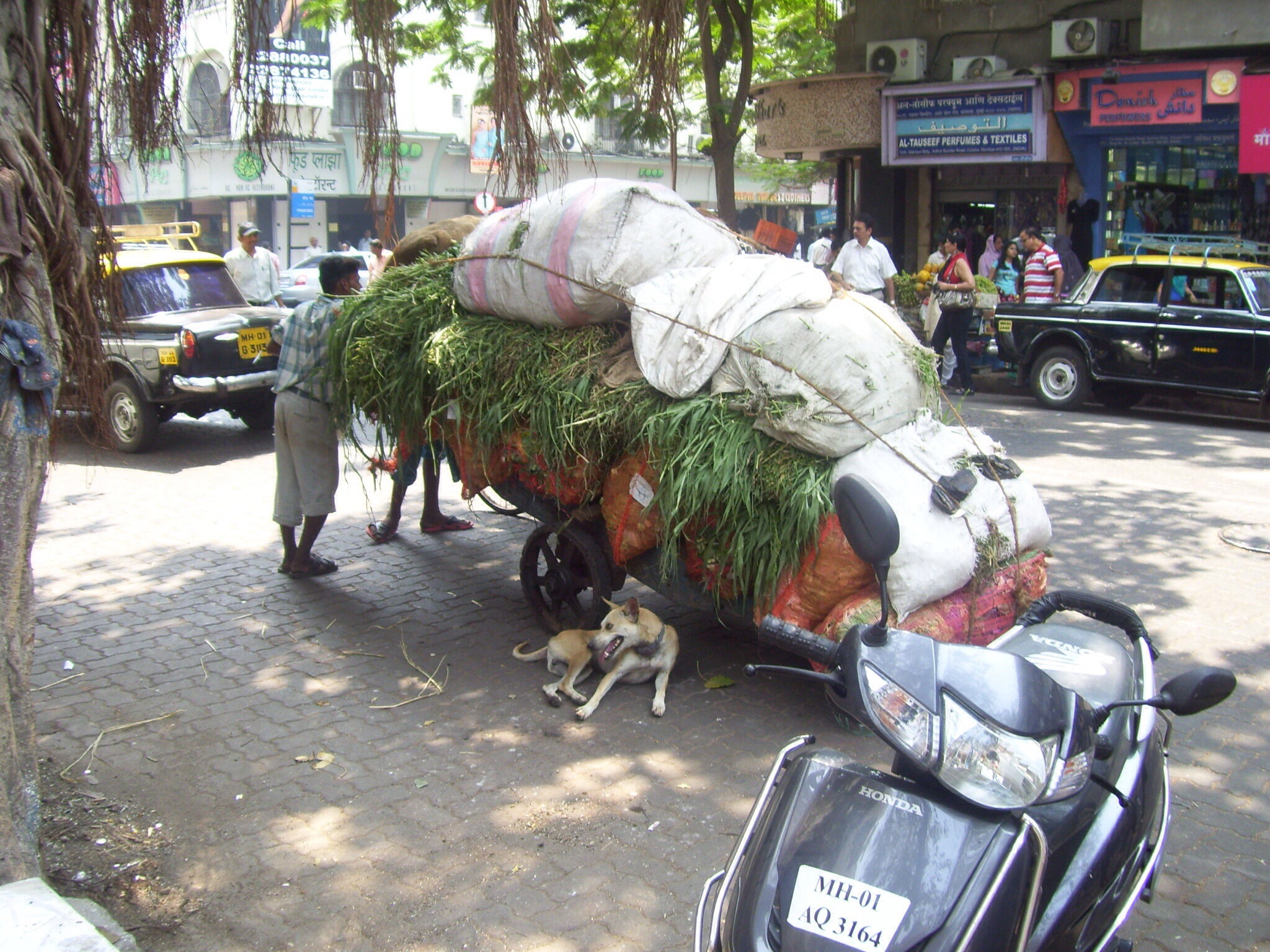
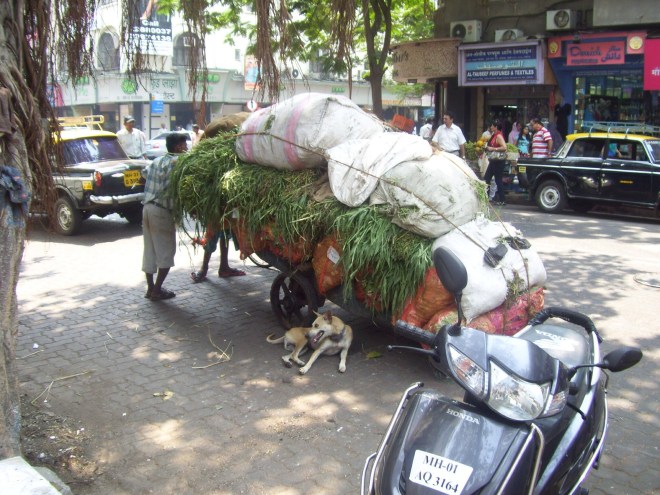
We hopped into his car and began our first day of touring in this colorful and very populated city of old Bombay. Our first stop was to be The Hanging Gardens. Slowly we made our way through the oppressive heat and crowded streets, past oxen drawn carts, bicycles and tut-tuts carrying tourists. Soon we began to wind around up a long hill to areas with more greenery than we had seen before.

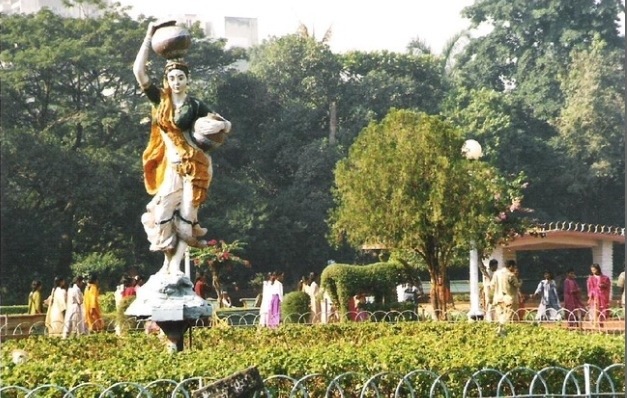
The Hanging Gardens, in Mumbai, also known as Pherozeshah Mehta Gardens, are terraced gardens perched at the top of Malabar Hill, on its western side, just opposite the Kamala Nehru Park. We found them to be the greenest place we had seen in our Mumbai travels yet. They provided sunset views over the Arabian Sea and featured numerous hedges carved into the shapes of animals – green and beautiful. The park was laid out in 1881 by Ulhas Ghapokar over Bombay’s main reservoir, some say to cover the water from the potentially contaminating activity of the nearby Tower of Silence, to be our second destination. The Tower is a circular, raised structure used by Parsi for exposure of the dead, particularly to scavenging birds.

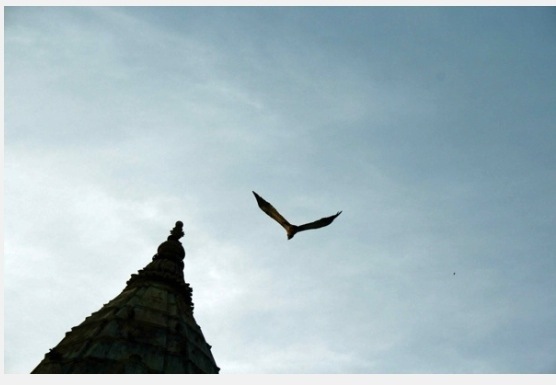
As we ascended to the top of the hill beyond the gardens we had just left, I could see large birds, vultures, I assumed, circling above the treetops. Gliding smoothly around, riding, cutting clean swaths high over our heads, again and again. I knew why they were there. I had done my homework. Sustenance was nearby. Our driver was a member of the sect, Parsi, and therefore allowed, at least partially, in that restricted area near the gardens that is closed to non-Parsees.

We knew the Parsi have an unusual method of disposal of the dead. The Parsi corpse is exposed to the rays of the sun, and the corpse is consumed or devoured by birds of prey — crows vultures, or kites.

As in Greta’s piece that took little over 10 minutes for the vultures to devour, it takes an hour or two at the Tower of Silence.

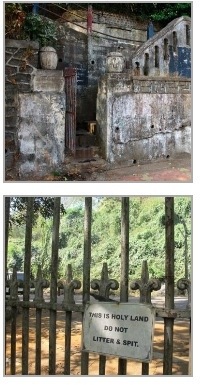
When we arrived at the entrance to the area, we chose not to go further. Just seeing the vultures above circling their prey, human flesh, was enough. Just the thought of what was happening beyond the gates was morbid to me.

In a way, in India, with little space alone for the living, I can see why cremation, or feeding dead human flesh to vultures would be practiced. Although, probably, the Parsi have a religious reason for such an ending, an ending after life is gone from the body that has nothing to do with available burial space, the sense of it all may be there somehow.

I know I am fortunate to have traveled the world many times, climbed the Great Wall of China, on my hands and knees practically crawled into the claustrophobic Great a Pyramid, endured the one hour trip by steps to the top of Masada in the Israeli desert, and up the 268 steps to the Tian Tan Buddha in Lantau. But, please believe me, just peaking through the fence into the Parsi burial grounds was more than I could handle. I just couldn’t do it. I didn’t ever want that memory stored anywhere.

As a result, turning the car around, our driver then followed our wishes and descended the hill toward the next stop, to something, to some place that would clean the air. A place where the sun and active human life are hard at work doing what they do. The remarkable open air laundries, Dhobi Ghat.

(Through my research I have since learned the Parsis are followers of one of the oldest, if not the oldest revealed religion in the world -Zoroastrianism. Globally, as a community, the Parsis number barely a hundred thousand. But it is not by numbers that this community can be judged, for no less a person than Mahatma Gandhi has recognized: “I am proud of my country, India, for having produced the splendid Zoroastrian stock, in numbers beneath contempt, but in charity and philanthropy, perhaps unequalled, certainly unsurpassed.”)

(And as another side note, there are far less vultures in number each year and the Parsi are concerned about the future and what that will bring to their burial ritual.)

20140512-151752.jpg

20140512-151737.jpg

20140512-152246.jpg